Sword Hunter Swords: Named Swords, Chests, and the Merge Ladder
Named Sword Hunter swords and how to get them: current code rewards, Chests that open into random Swords, the five-stage merge ladder, and Base merging rules.
Swords in Sword Hunter come from three places: redeemable codes, Chests, and cash-funded buying and merging at your Base. From there, merging walks you up a ladder from a LV.1 stick to the huge blue sword players call Rank 999. A complete catalogue with per-sword stats isn't documented yet; below are the swords and sword items named so far and how each one is acquired. See the Codes page for available codes, rewards, and redemption steps.
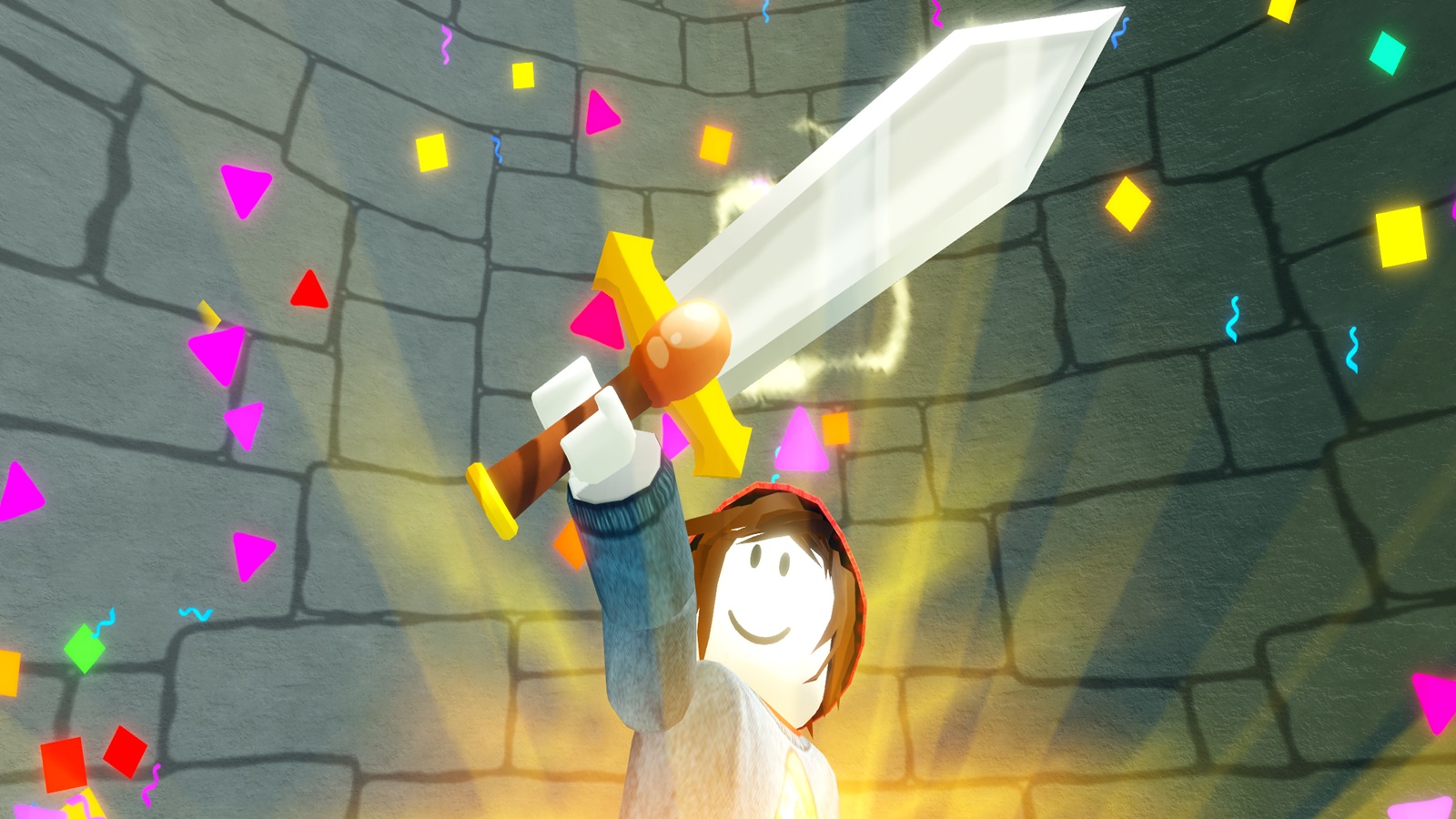
Swords and sword items from codes
Swords may be received as rewards or obtained through chests. Read the item’s name and statline before choosing what to equip.
Read a Sword Skin’s item description to determine how it affects your equipment.
Chests open into random Swords
Chests can open into random swords. Each sword has its own statline; compare the result with your equipped sword before switching.
The merge ladder: five stages in order
The visible ladder reads, in order: you start with a LV.1 stick, move through steel and gold blades, pick up a cave gem sword, push a rainbow crystal toward LV.999, and eventually hold the huge blue sword at the top.
Data table
- #
- 1
- Ladder stage
- LV.1 stick
- What it marks
- The start of every new hunter. Fine for the first packs on tropical islands — not fine for the volcano or the giant gorilla.
- #
- 2
- Ladder stage
- Steel or gold blades
- What it marks
- The first real merge off the stick — the upgrade to target in your first hour.
- #
- 3
- Ladder stage
- Cave gem sword
- What it marks
- The jungle cave reward on the ladder.
- #
- 4
- Ladder stage
- Rainbow crystal LV.999
- What it marks
- A long mid-ladder stretch, not a single click — farm, merge, farm, merge.
- #
- 5
- Ladder stage
- Huge blue Rank 999 sword
- What it marks
- The end goal players chase — large, obvious, and expensive in time even though the game is free to play.
You do not jump from the stick to the top — you climb through steel, gold, cave gem, and rainbow crystal first. Two boundaries on this list: "Rank 999" is the name players use for the huge blue sword at the top of the ladder, not an official in-game label, and the stages are a snapshot of the blades shown in official art rather than datamined damage stats.
How merging works: Base, Cash, and F to select
The game's own description sets the rules: "Merge Swords to unlock stronger ones," "Return to your Base to upgrade and merge your Swords!," "Your Swords collect Loot offline," and the controls "E - Attack, R - Toggle Auto Attack, F - Select Sword." Merging runs on cash through the farm loop: loot drops, you convert loot to cash, and cash is what merges cost at your Base. Each run ends in the same decision — either merge at base or park the sword for offline loot. After a merge, press F to select the new blade; merge and forget F, and you can spend a whole farm run looking like you still have a stick. Bulk merging works too — gameplay shows three swords merged for a better one, and a ten-sword merge that produced a single tier 2 sword.
Buying swords, and names and tiers seen in gameplay
The named swords and tiers below come from gameplay footage, so treat them as observations rather than a stats table. One session buys swords at base with cash, then merges ten at once and lands an edge blade at Edge tier four — noting that the merge skipped saber, so a merge can jump past a named rung. Another session holding 5 billion cash buys a new sword for 30K (the only purchase price shown), pulls Valor at tier five, and earlier receives a sword from a free gift. An early merge in another session yields a tier 2 sword. The footage shows no price table, no per-sword damage numbers, and no rarity or drop rates — none of those are documented for any named sword yet.